
Palimpsestes

En ordre d’apparition:
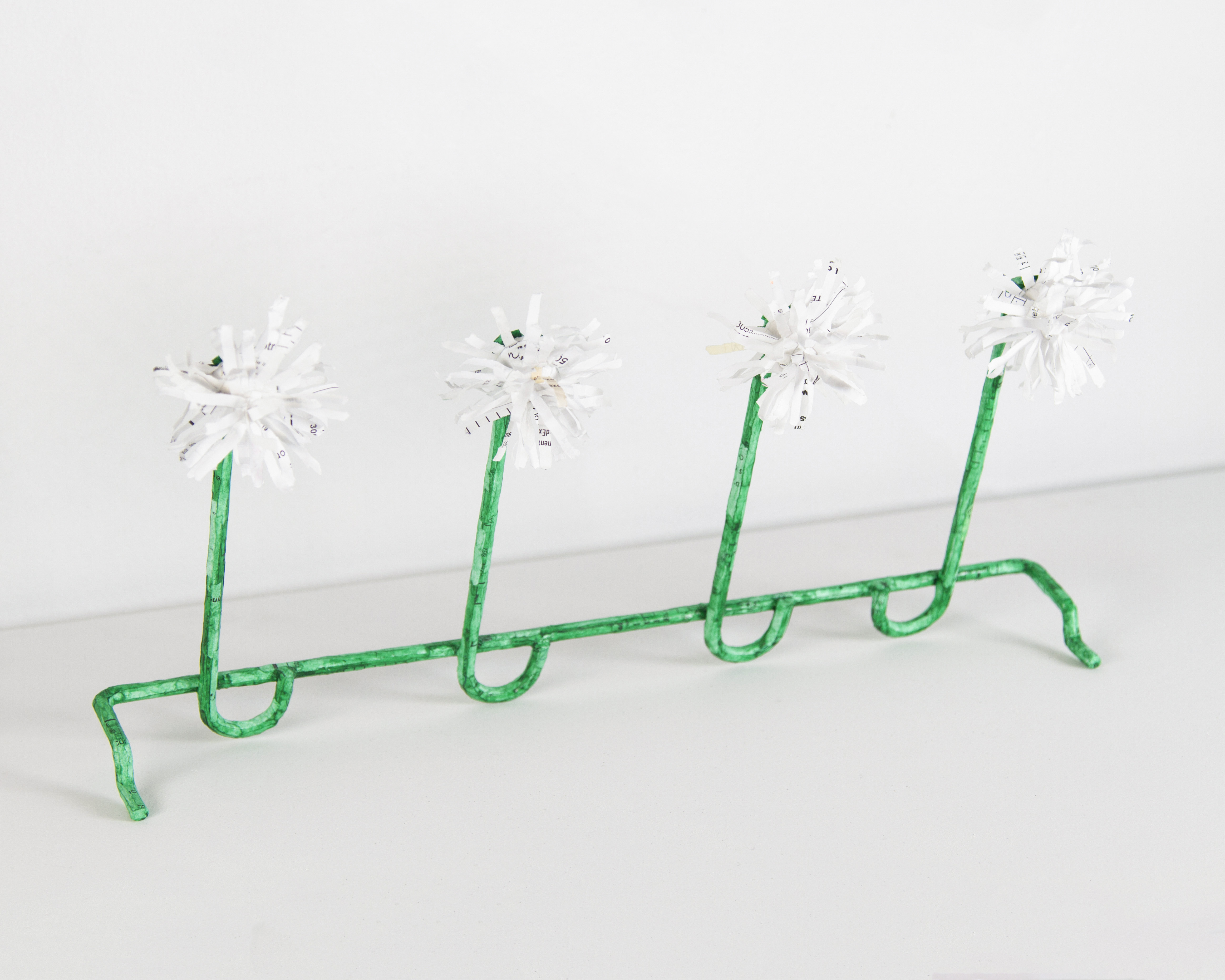
Pissenlits,
2021
Papiers confidentiels déchiquetés, crochet
16,5" x 8" x 4"
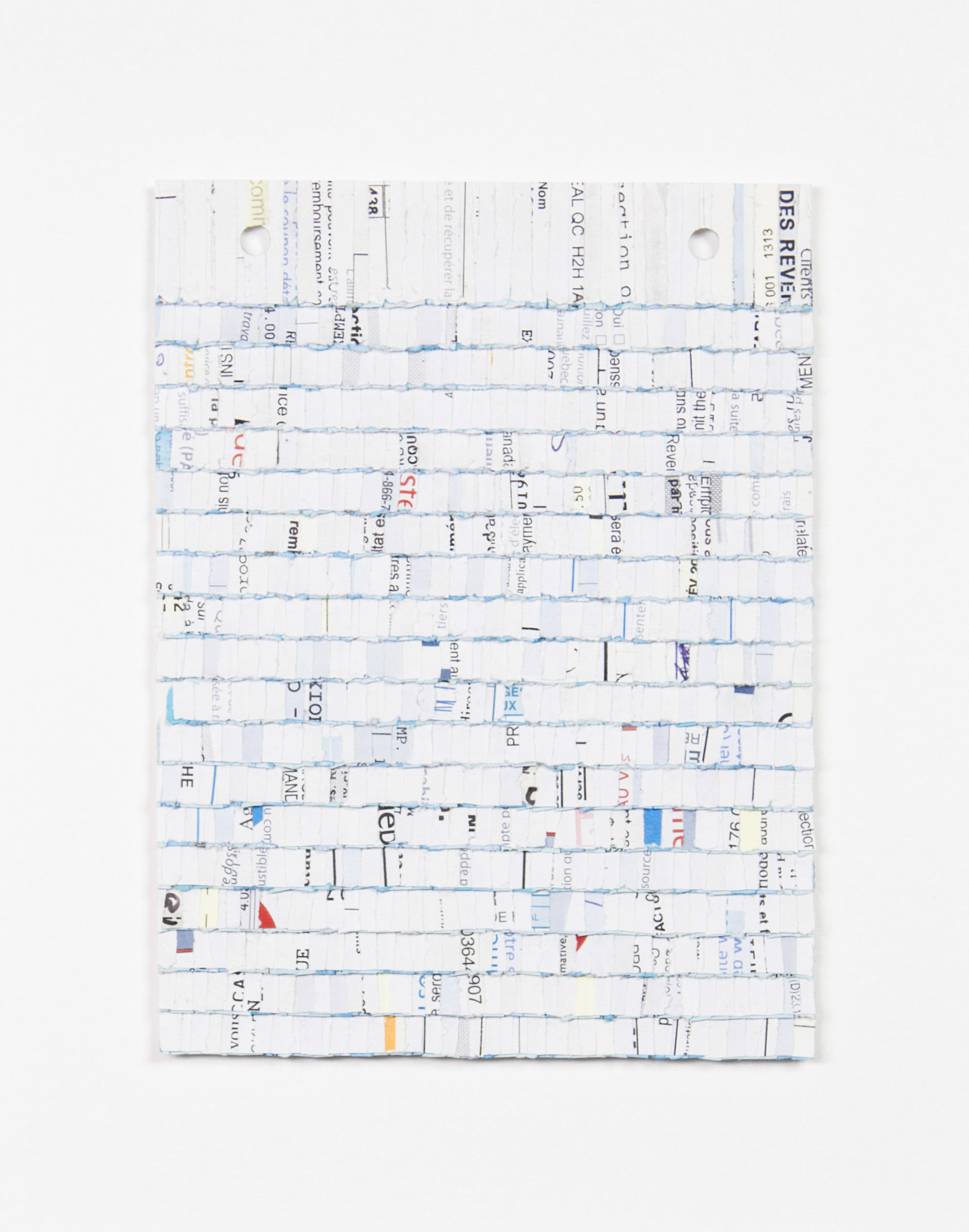
Palimpseste #3
2019
Papiers confidentiels
déchiquetés
18 x 13 cm
Palimpseste #5
2022
TAB Datafile, étiquettes alphabétiques
23 x 18 cm
Palimpseste #6
2022
TAB Datafile, étiquettes alphabétiques
7,5 x 7,5 cm
Pissenlits,
2021
Papiers confidentiels déchiquetés, crochet
16,5" x 8" x 4"
Palimpseste #3
2019
Papiers confidentiels
déchiquetés
18 x 13 cm
Palimpseste #5
2022
TAB Datafile, étiquettes alphabétiques
23 x 18 cm
Palimpseste #6
2022
TAB Datafile, étiquettes alphabétiques
7,5 x 7,5 cm
(FR) La série Palimpseste prend naissance à partir d'une découverte fortuite : un sac de documents confidentiels déchiquetés trouvé dans la rue. Destinés à faire disparaître une information, ces fragments de papier deviennent la matière première d'un nouveau système de composition.
En alignant, classant et assemblant minutieusement les bandelettes de papier, je reconstruis des formes familières issues de l'univers de la papeterie — feuilles lignées, Post-it, aide-mémoire — plutôt que les documents originaux. Le contenu des archives a été perdu, mais leurs vestiges donnent naissance à une nouvelle écriture, sculpturale et graphique.
À l'image des palimpsestes, ces oeuvres procèdent par effacement et réécriture. Elles s'intéressent moins à ce qui a disparu qu'au potentiel de transformation contenu dans les traces. Entre collage, sculpture et archive, la série met en lumière la manière dont les systèmes qui organisent notre pensée continuent de produire du sens, même lorsque les informations qu'ils portaient se sont effacées.
(EN) Palimpsest emerged from a chance encounter with a bag of shredded confidential documents found on the street. Intended to erase information permanently, these paper fragments became the raw material for a new system of composition.
By carefully aligning, sorting, and assembling the shredded strips, I reconstruct familiar forms borrowed from the everyday language of stationery—lined paper, Post-it notes, and memo pads—rather than the original documents themselves. The information once carried by these archives is irretrievably lost, while their physical remains are transformed into a new sculptural and graphic language.
Like the historical palimpsest, these works are shaped through acts of erasure and rewriting. Rather than recovering what has disappeared, the series explores the transformative potential contained within its traces. Situated between collage, sculpture, and archival practice, Palimpsest considers the material structures that support writing, memory, and thought, revealing how systems that organize our understanding of the world continue to shape meaning even after the information they once carried has vanished.
En alignant, classant et assemblant minutieusement les bandelettes de papier, je reconstruis des formes familières issues de l'univers de la papeterie — feuilles lignées, Post-it, aide-mémoire — plutôt que les documents originaux. Le contenu des archives a été perdu, mais leurs vestiges donnent naissance à une nouvelle écriture, sculpturale et graphique.
À l'image des palimpsestes, ces oeuvres procèdent par effacement et réécriture. Elles s'intéressent moins à ce qui a disparu qu'au potentiel de transformation contenu dans les traces. Entre collage, sculpture et archive, la série met en lumière la manière dont les systèmes qui organisent notre pensée continuent de produire du sens, même lorsque les informations qu'ils portaient se sont effacées.
(EN) Palimpsest emerged from a chance encounter with a bag of shredded confidential documents found on the street. Intended to erase information permanently, these paper fragments became the raw material for a new system of composition.
By carefully aligning, sorting, and assembling the shredded strips, I reconstruct familiar forms borrowed from the everyday language of stationery—lined paper, Post-it notes, and memo pads—rather than the original documents themselves. The information once carried by these archives is irretrievably lost, while their physical remains are transformed into a new sculptural and graphic language.
Like the historical palimpsest, these works are shaped through acts of erasure and rewriting. Rather than recovering what has disappeared, the series explores the transformative potential contained within its traces. Situated between collage, sculpture, and archival practice, Palimpsest considers the material structures that support writing, memory, and thought, revealing how systems that organize our understanding of the world continue to shape meaning even after the information they once carried has vanished.